


A Life in Horses: Robert Stewart’s Story

Robert Stewart has spent a lifetime in the sport, but the way he talks about horses still feels personal. The memories go back to Tamworth and a father who believed riding was a good way for young boys to grow up.
“Once you’ve fallen off a hundred times, you can call yourself a rider,” Rob remembers his father saying in those early days. His father had been a jackaroo and believed horses were simply part of life. Through friends in the horse show circuit, including the well-known Kelly brothers, Rob and his brother were soon in the saddle. It was not structured training or polished horsemanship in those first years. “It wasn’t particularly fancy,” Rob says with a laugh. “Just stay on.”
Advertisement
That simple beginning quickly grew into a real passion. Through Pony Club in Queensland Rob rode as often as he could, competing in both Jumping and Eventing. “I was eventing I guess from probably 13 onwards,” he says. “I did state championships and captained the junior team for Queensland when I was about 15.” The horses were kept on a small property in the outer northern suburbs of Brisbane, close enough to the Pony Club grounds that Rob could ride there every day after school. “We had them at an old fellow’s place that had a few boxes and a big paddock,” he says. “We’d just ride over to the pony club grounds and train. It was close to school too, which was handy. I nicked off from school and went to ride my horse, which a lot of us did.”
At seventeen Rob moved to Sydney, and life suddenly looked very different. Horses were still the focus, but he also had to earn a living. “I was trying to survive,” he says. “I always wanted to be in photography, so I started working in photography in North Sydney. I lived on the northern beaches.” As soon as he could afford it he found himself another horse and agisted it at Terrey Hills. His early connections in Sydney were limited, but one of them proved hugely influential. “The only person I really knew in Sydney was Tina Wommelsdorf , who was the top Dressage rider in the country at the time,” he says. “She’d done clinics up in Queensland and I’d met her there.” Through Tina he was introduced to George Sanna, and that relationship would shape the direction of his career.
Advertisement
At that point Rob still saw himself as an event rider. His dressage was strong and he felt confident across country, but the showjumping phase was where he believed he needed the most improvement. “I started working with George so that I could become a better eventing rider,” he explains. “My showjumping was the weakest phase, so I thought that was where I needed help.” What he did not expect was that the discipline he initially saw as a weakness would soon become his greatest strength. “Then it became my best phase,” he says. “I had a few horses that weren’t really eventers and I just lost my passion for Eventing. It moved more towards Jumping.”
Working with George opened Rob’s eyes to what a professional training environment looked like. “I’d never worked in a professional yard before,” he says. “The day-to-day maintenance and management, the attention to detail, all of that was new to me.” George’s riding style also made a deep impression. “He was a very stylish rider, very effective and very technical, and he passed that on in his coaching,” Rob says. “He was the benchmark in the country and I was privileged enough to become his working pupil.” The experience was intense but formative. “It was a steep learning curve and one that I valued enormously. We’re still very close friends to this day.”
Advertisement

Eventually there came a point where Rob had to decide whether horses would remain a passion or become his profession. In the early 1980s he found himself juggling work and riding, trying to train horses before and after a full day’s employment. “I was really struggling with the work I was doing and finding time to ride,” he says. The turning point came when he won a national eventing title in the mid-1980s. “That was the moment I thought, if you want to do this, you need to get stuck into it properly.” A new job gave him more flexibility, and a year of commercial sponsorship gave him just enough financial security to step out on his own.
Rob and his first wife Debbie first established a small property at Kellyville before eventually moving to Glossodia, directly across the road from George. It was the perfect environment for building a professional horse business. “We built a property there that worked well for all the disciplines,” Rob says. “We had a jumping arena, a dressage arena and good gallop areas around us.” The business model was typical of many professional horse operations in Australia. Rob trained horses, coached riders, ran clinics and educated combinations. “In this game you have to have a fairly wide toolbox,” he says. “You do horse training, rider training, clinics, coaching, whatever is needed.”
For many years he travelled extensively, running clinics across the eastern states and teaching weekly lessons in places like Centennial Park and Terrey Hills. Clients agisted horses with him, riders came for regular coaching, and the work provided a steady if modest living. “Everything contributed,” he says. “I wouldn’t say it was a fantastic living, but it sustained the lifestyle.”
The financial reality of the sport, however, has always been a challenge. Rob is candid when he reflects on that aspect of his career. “If there was a single factor that was the most difficult, it was managing it financially,” he says. Earlier in his career the sport felt more accessible. Horses could be sourced from the racetrack and produced carefully over time, and the overall cost of competing was far lower than it is today. “We didn’t need fancy trucks and the shows were less expensive,” Rob says. “It was a simpler time.” That has changed dramatically. “These days it’s just too hard to sustain the cost of competing at a serious level,” he says. “It wears you down.”
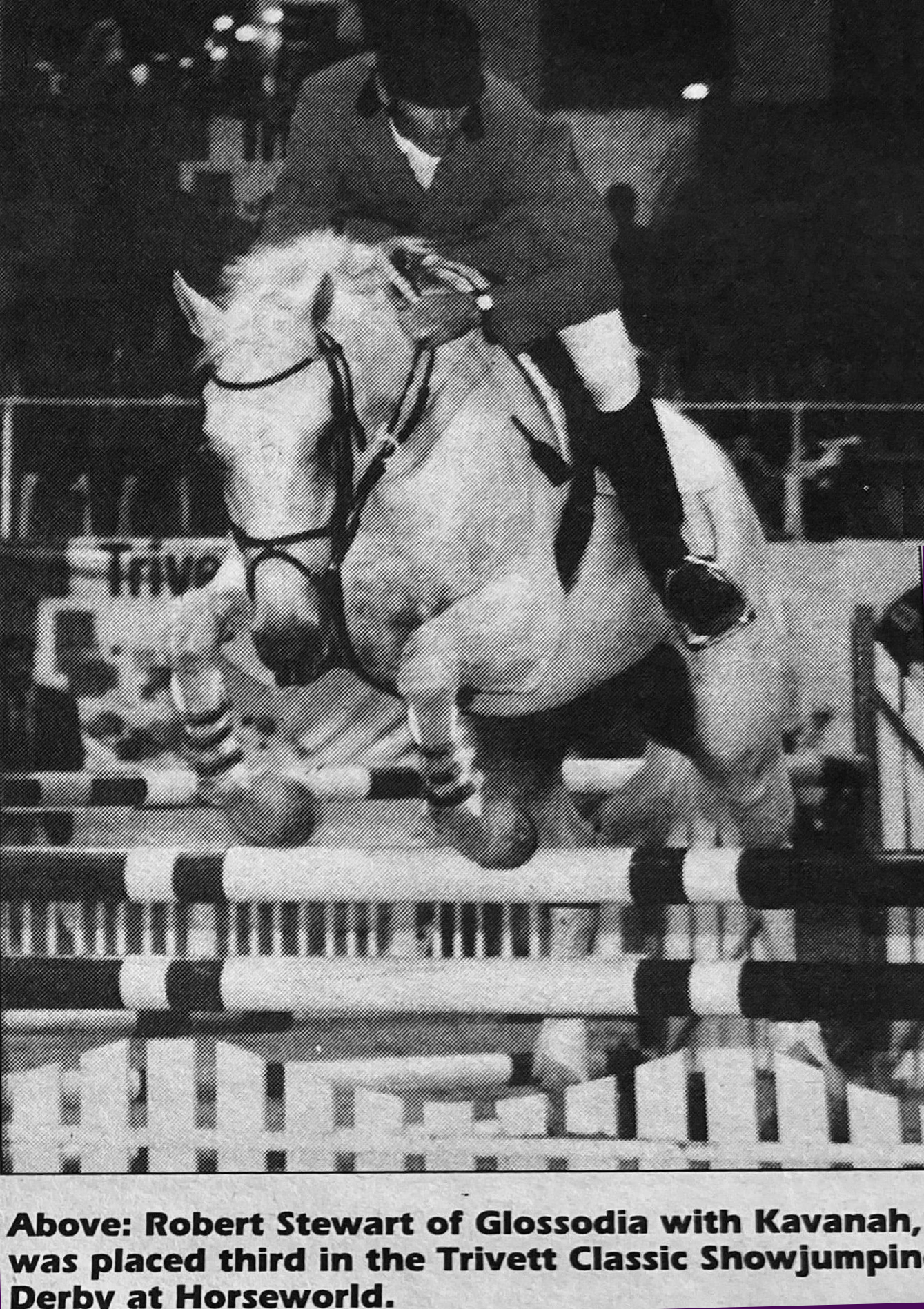
Despite those pressures Rob continued to ride good horses throughout his career, and a few in particular left a lasting impression. One of the most significant was Kavanagh, a horse Rob still describes as the best he has ever ridden. “He was the best horse I ever put a leg over,” Rob says. “An incredible jumping machine with natural instincts that were just unbelievable.” Riding a horse like that, he says, is something every rider hopes for but only a few experience. “You’re very privileged if you get to ride a horse like that.”
Advertisement
While Rob enjoyed success in the saddle, coaching gradually became the area where his influence was felt most widely. Many riders across Australia still credit him with shaping their approach to training. His philosophy grew from his own experience as a student. “I always wanted to understand what I was doing and why,” he says. “Some coaches would just say do this, do that, but I wanted to know the reasoning behind it.” Over time he developed a teaching approach that considered how different people learn. Some riders need to hear explanations, others need to watch, and some simply need to feel the exercise themselves. “If you combine those things together in a clinic environment, everyone learns,” he explains.
That philosophy eventually fed into the national coaching system. Rob spent many years involved in coaching committees and education programs, helping develop the structure that supports rider development across the country. He also benefited enormously from exposure to leading international coaches who visited Australia. Clinics with figures such as George Morris had a profound impact on an entire generation of Australian riders. “His teaching method was incredibly disciplined,” Rob says. “We’d start with poles on the ground and by the end of the clinic we’d be jumping enormous tracks. It refined everyone.”
Advertisement
The conversation inevitably turned to the accident that has recently changed Rob’s life. While riding a horse that had always been considered quiet and reliable, something went wrong and he suffered catastrophic injuries in the fall. “I had an open book fracture of the pelvis,” Rob explains. “The pelvis is a ring and the front and the back were broken.” A ruptured artery made the situation even more critical and he was airlifted to hospital, where complications required doctors to place him in an induced coma. Rob spent 46 days in hospital and remembers very little of much of that time.
The support from the equestrian community during his recovery has meant a great deal to him. Friends and former students organised assistance while he was still in hospital, and riders from across the country reached out. “The whole community got around that,” Rob says. “I felt humbled by it.”
Recovery is still ongoing. Months later Rob is continuing rehabilitation and gradually regaining mobility. The experience has also forced him to accept that his riding career has likely come to an end. “I realised that wasn’t what I was meant to do anymore,” he says quietly. “It’s not about fear. It’s just reality.” What remains unchanged, however, is his love for the sport and the people within it. “I still love it,” Rob says. “I still love watching it. I’ve had a pretty fair inning.”
When asked what advice he would give his younger self, Rob’s answer is thoughtful and honest. “Be true to yourself,” he says. “Only ride good horses and have knowledgeable people around you.” He pauses before adding a final truth that every rider eventually understands. “If you want to stay in the sport, it costs a lot,” he says. “Not just in money. It costs a lot in sacrifice.”
The full interview with Rob can be found on the ‘All Clear’ podcast:
Available now on:
 YouTube: https://bit.ly/4cTXRSr Spotify: https://bit.ly/3MzNOYk
 Apple Podcasts: https://bit.ly/4bgmxU6
Advertisement