


The Man Behind the Course: Anderson Lima’s Journey to the Top
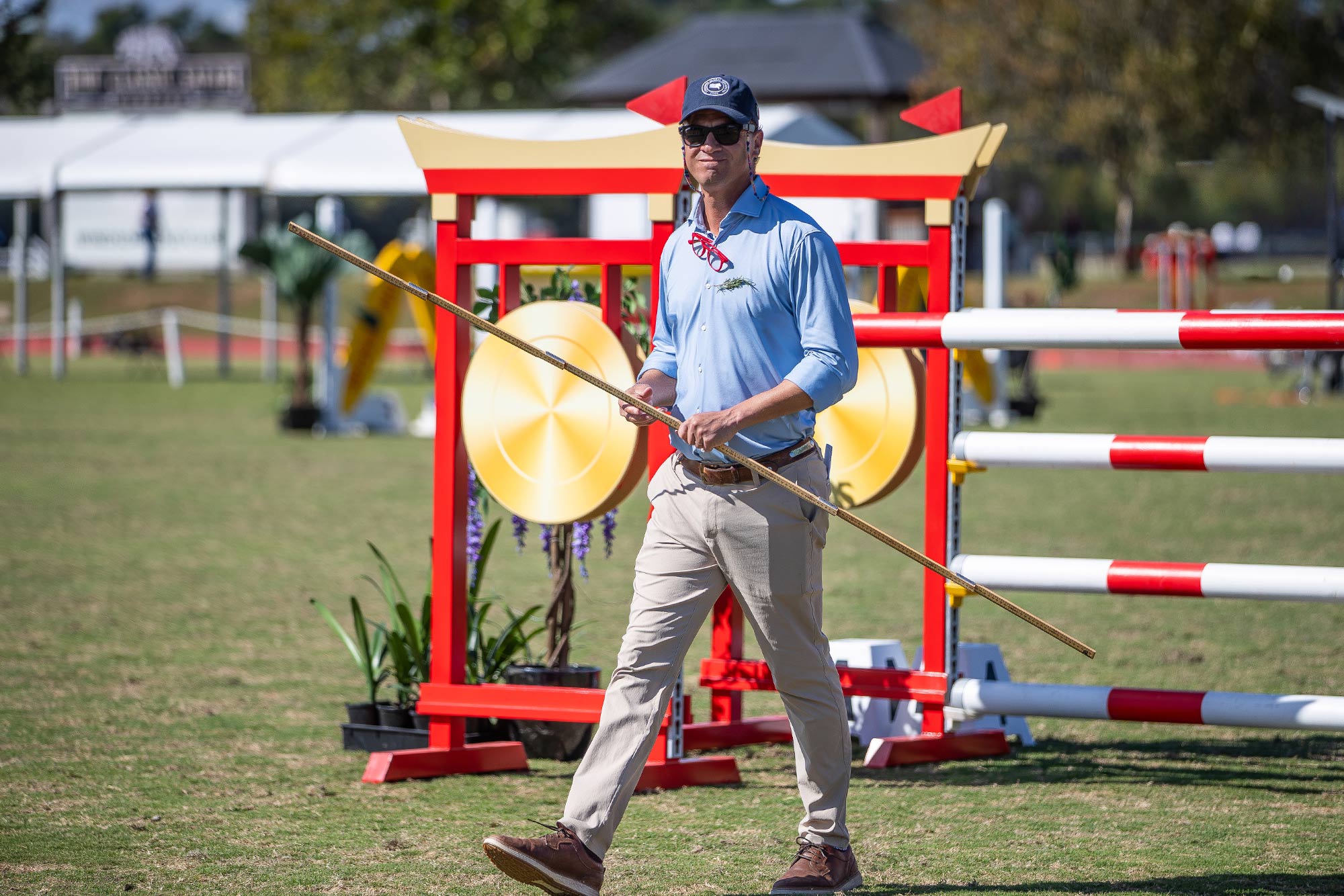
There is a particular kind of passion that reveals itself early and never really lets go. For Anderson Lima, one of the most respected course designers working in Jumping today, that passion announced itself when he was a child, not on horseback, but standing at the edge of a ring, watching the sport unfold beneath his feet. Born and raised in Brazil, Anderson grew up in a horse family. His father, a professional rider who remains active with horses at 79, shaped the environment that would define Anderson’s life. The farm where his father worked was large and well-connected, with professional riders and course designers coming and going throughout the year. For Anderson, those visits were formative in ways he perhaps did not fully understand at the time.
Advertisement

He rode as a boy, from around ten or eleven years old, but competing never quite captured him the way it did his older brother, who rode with a natural brilliance that Anderson admired and, by his own admission, envied a little. What drew him instead was the ring itself. He would warm up his father’s horses before an event, happy to be useful but never quite fulfilled by the saddle alone. What truly fascinated him was the course. At one of the farm’s home shows, a course designer handed a young Anderson a course plan and asked for his help. That moment, seeing how a course was sketched by hand and brought to life in the arena, stayed with him. By the time he was sixteen, he had built his first course for one of his father’s shows. By eighteen, he had made his decision. This was his career.
It was not a simple path to walk away from conventional education, and Anderson knew it. He spoke with his father, who was clear and direct in the way of a former military man. If you choose this, do it. Give everything to it. Do not come back and regret it. Those words shaped the way Anderson approached every opportunity that followed, grabbing each one with both hands and carrying the momentum forward.
Advertisement
Brazil, he reflects, was a strong environment for course designers at the time, with talented and experienced figures working across the country and international designers regularly visiting. That culture of knowledge-sharing gave Anderson access to a world beyond his own backyard, and he absorbed everything he could from the people around him. The opportunity to attend an FEI seminar in Germany opened his eyes further, showing him that the work had no ceiling, that there were no barriers to where a course designer could go if they were committed and curious.
The real turning point came when he was invited to Wellington in the United States, not as a course designer but as part of the ring crew, working in the arena during one of the most significant venues in the world. He was hesitant. He was already a course designer, not ring crew. But the friend who invited him was persuasive, pointing out that Anderson would be inside the main arena, working alongside some of the best course designers in the sport for weeks at a time. He went in 2000, and what he saw there changed everything. Watching course designers at the elite level, understanding the influence they had on an event, the way they could shape a competition and elevate a sport, convinced him that he wanted to pursue this at the highest level possible. He would return to Wellington for many years after that, eventually for ten, eleven, twelve weeks at a time.
He also spent years travelling to Europe with Frank Rothenberger, working in the factory building jumps during the week and attending shows across the continent on weekends. He went to Spruce Meadows every summer for what he estimates was around fifteen years, sometimes during competition weeks and sometimes outside them. Through all of it, he was not just watching. He was learning, absorbing the philosophy and the craft of course designers who had spent decades developing their understanding of horses, riders, distances, materials, and the invisible architecture of a great competition course.
Advertisement
That craft, when Anderson speaks about it, is more intuitive than methodical, more feeling than formula. When he walks into an empty arena before a show, he does not arrive with a finished plan. He gathers as much information as he can from organisers, from riders who have competed there before, and from colleagues who know the venue, and he starts from a position of caution, building a picture over the first day or two by watching how horses and riders move through the space. He describes himself as too unorganised to work from a numbered sequence, preferring instead to find a line he likes and develop from there, letting the whole picture emerge rather than mapping it out step by step.
Anderson is clear that the goal of a course is not to catch riders out. The word tricky is one he says course designers dislike, because tricky implies something unfair. The aim is to build courses that are challenging, that present real tests of skill and partnership, but that remain fundamentally fair to the horse. When he watches a class go, what he is really looking for is horses jumping without undue struggle. Clear round numbers, he points out, do not tell the full story. A class with twenty clears and a class with three clears can both be well-built, because the competition continues between the riders regardless. What matters to him is that the horses are able to jump well within the demands being placed on them.
Advertisement
With the FEI Jumping World Cup Final in Fort Worth, Texas approaching at the time of this conversation, Anderson spoke with a mixture of calm and genuine reverence about the responsibility that comes with designing for a championship of that scale. He has been part of World Cup finals before, working alongside other prominent designers in Las Vegas and in Europe, but having sole responsibility for Fort Worth is something he describes as one of the biggest honours of his career. He does not intend to surprise anyone. He describes himself as a conventional course designer, someone who does not seek to reinvent the wheel or create something unexpected for its own sake. What the riders will find, he believes, is exactly what they are experienced enough to expect.
Anderson also spoke about his connection to Australia, which began with a last-minute invitation to design at Waratah Show Jumping. Olaf Peterson Jnr reached out, asked if he had availability, and within a short time Anderson was on a plane. What he found there left a genuine impression. He speaks warmly about Edwena Mitchell and her team, about the quality of the people who helped him and supported him through two weeks of competition, and about reconnecting with John Valance, a long-time friend whose material and operation Anderson found impressive. He felt the week went well, that the courses were right for the group, and that the Australians he watched compete were doing nothing wrong.
Anderson returned to Australia soon after the World Cup Final to design for the fantastic Showcase of Showjumping, travelling directly from a championship in Mexico. This time, he was working outdoors on grass, an environment he loves, and the event proved to be an outstanding showcase for the sport.
Anderson Lima is passionate about course design in a way that has never dimmed from the moment a stranger handed a teenager a hand-drawn course plan and asked for help. That passion has taken him to the top of his field, and it still drives him, every single week, in every single arena he walks into.
You can watch the full episode on the All Clear Podcast on:
YouTube: https://bit.ly/4mdHPpb
Spotify: https://bit.ly/3Q9qy4x
Apple Podcasts: https://bit.ly/4sk1buk
Advertisement